 The Landlord Register Is Coming. Are You Ready?
A new national landlord register is on its way as part of the Renters' Rights Act, and it applies to literally every private landlord in England, whether you own one flat or fifty.
It's called the Private Rented Sector Database, though it's been talked about under a few different names, including "Register your rental property." The Ministry of Housing, Communities and Local Government (MHCLG), the government department running the scheme, describes it in its own roadmap as an "innovative Database of PRS properties," so don't be surprised if the branding shifts again before launch. Whatever it ends up being called, the idea is simple: soon there'll be an official record of who's letting what, and you'll need to be on it.
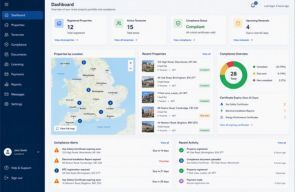
It's also worth knowing this isn't just an idea on paper. A pilot has already been running since 1 September 2025 in Birmingham, Gateshead and Nottingham, with MHCLG testing the three-part registration process (personal details, property details, and compliance information like gas safety certificates) and gathering feedback along the way. So the framework you'll eventually use has already been through a real-world trial run.
 So what do you actually have to do?
Two things, really. You register yourself as a landlord, and you register each property you let. If you own through a limited company, or as part of a partnership, or via a trust, each of those needs its own registration too. It's not a one-and-done for your whole portfolio.
There's no getting out of it by virtue of only having one rental property, which is worth flagging because a lot of smaller landlords assume these things are aimed at the big portfolio owners. They're not. A single buy-to-let flat still needs registering.
When you do register, expect to provide contact details for yourself (and any joint landlords), full property details including address, type, number of bedrooms and occupants, and whether it's furnished, plus your gas, electrical and EPC certificates. So it's worth having those documents current and easy to find well before your window opens, rather than hunting for a gas certificate at the last minute.
If you use a letting agent, they can often handle the registration on your behalf, but here's the catch: the legal duty is yours, not theirs. If your agent drops the ball, you're the one holding the breach. So if you're relying on an agent, it's worth actually asking them whether it's on their to-do list, rather than assuming it is.
A handful of arrangements are exempt, including holiday lets and lodgers living with the owner, but for the vast majority of us renting out property in England, it applies.
When does this start?
The database rolls out regionally from late 2026, with full nationwide coverage expected during 2027. It isn't a case of everyone piling in on day one. Each region gets its own launch window, and once it goes live where you are, you'll have three months to get registered.
The West Midlands goes first, with a deadline of 14 March 2027. From there, other regions follow through 2027, with the last deadlines falling in November. For the South East, the date hasn't been formally confirmed yet, but early indications point to a rollout around March 2027. I'll update this post as soon as it's officially confirmed, but for now the safest bet is to keep half an eye on GOV.UK over the next few months rather than wait for a reminder.
 What's it going to cost?
There will be a fee, and it'll need renewing annually, but MHCLG hasn't confirmed the actual amount yet. It's said the fee will be "proportionate," and that it can be treated as a business expense. Industry estimates are putting it at around £65 per property, based on comparisons with similar schemes like Rent Smart Wales, but treat that as an educated guess rather than a confirmed figure until MHCLG publishes the real number closer to launch.
What happens if you don't register?
This is the part landlords really shouldn't gloss over. Once your registration window is live in your area, you simply can't advertise, market or let a property without a valid Landlord Registration Number and Property Registration Number.
The penalties are steep: up to £7,000 for an initial breach, rising to £40,000 for repeated or more serious failures, such as knowingly submitting false information, with criminal prosecution possible in the worst cases. Letting agents aren't off the hook either. If they fail to do their due diligence, they can face the same fines.
Perhaps the sharpest sting is this: if you haven't registered, you won't be able to obtain a possession order (with a couple of narrow exceptions), which effectively means an unregistered landlord can't rely on a Section 8 notice to get their property back. The good news is that this isn't a permanent lock-out. MHCLG has said the restriction is designed to be fixable. Register, and the door to possession opens back up. But it's still a strong reason not to let registration slip.
There's one more wrinkle worth knowing: a rent repayment order can also be sought against a landlord in two specific situations, giving false information, or continuing to let unregistered after already being fined for it.
 A couple of things the database won't do
It's not replacing selective licensing. MHCLG has confirmed that stays in place as a separate tool for local authorities, so if you're already licensed under a selective scheme, this is an addition, not a substitute. It will, however, effectively replace the old Rogue Landlord List, with certain offence-related details becoming visible to tenants and prospective tenants. Your personal information as a landlord won't be published, but property standards information is expected to be, once the detail is set out in regulations.
Quick reminder: this isn't the only change
It's easy to lose track of what's already happened versus what's still coming, so a quick recap: the tenancy reforms landed back on 1 May 2026. That's the bit that scrapped Section 21 "no-fault" evictions, turned fixed-term tenancies into rolling ones, capped rent increases to once a year with two months' notice, limited advance rent to one month, and banned the rent bidding wars that had crept into a lot of listings.
If you somehow missed sending tenants the Renters' Rights Act Information Sheet by 31 May, that ship has sailed. Worth checking it actually happened if you're not sure.
And there's more still to come after the database. A Private Landlord Ombudsman is in the pipeline too, though that's not expected until around 2028.
What's worth doing now
Nothing urgent needs doing this week, but a bit of prep now saves a scramble later:
- Get your paperwork in order (proof of ownership, tenancy agreements, gas, electrical and EPC certificates) so registration is quick when your window opens
- If you use an agent, ask them directly who's responsible for registering
- Budget roughly £65 per property as a starting estimate, but keep some flexibility until the fee is confirmed
- Keep an eye out for your region's confirmed date
I'll come back and update this once the South East deadline and the registration fee are officially confirmed. In the meantime, if you're unsure how any of this applies to your specific setup, it's worth a conversation with your letting agent or a property solicitor rather than guessing


 The Landlord Register Is Coming. Are You Ready?


